

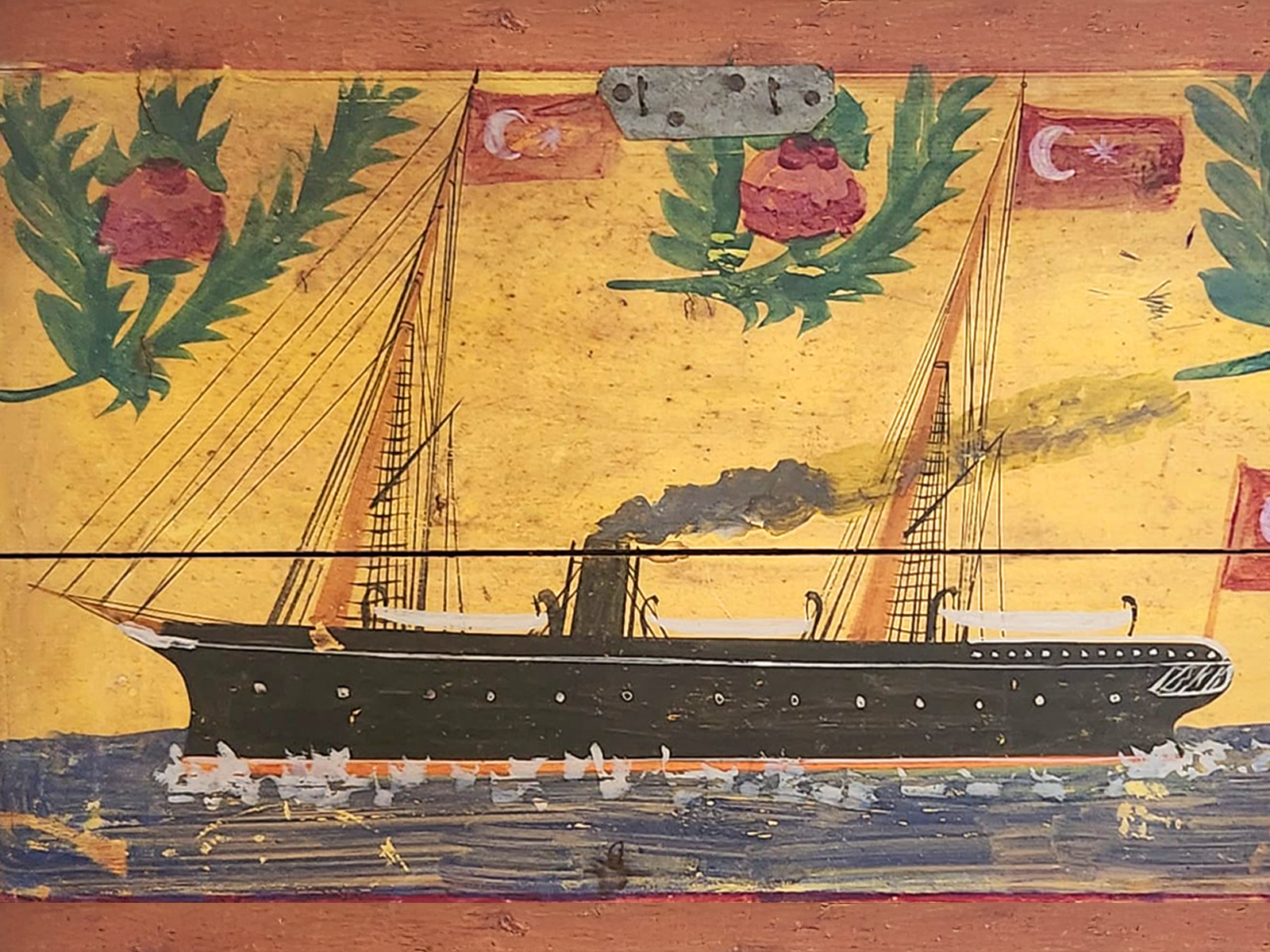
Although the custom of dowry is gradually fading into history, it continues to tell us a lot from a cultural, sociological, and aesthetic perspective. Especially the little-known ship motifs engraved or illustrated on dowry chests.
The custom of dowry is a tradition among Turks that dates back to before Islam. The chests in which the dowry is kept also have their own aesthetic and cultural value. Ship depictions are often found on the inside of the lids of some wooden carved chests. These depictions, dating from the final years of the Ottoman Empire to the early years of the Republic, not only reveal much about our ancient seafaring culture, they also stand out as part of the cultural heritage of the transition period from the Ottoman Empire to the Republic.
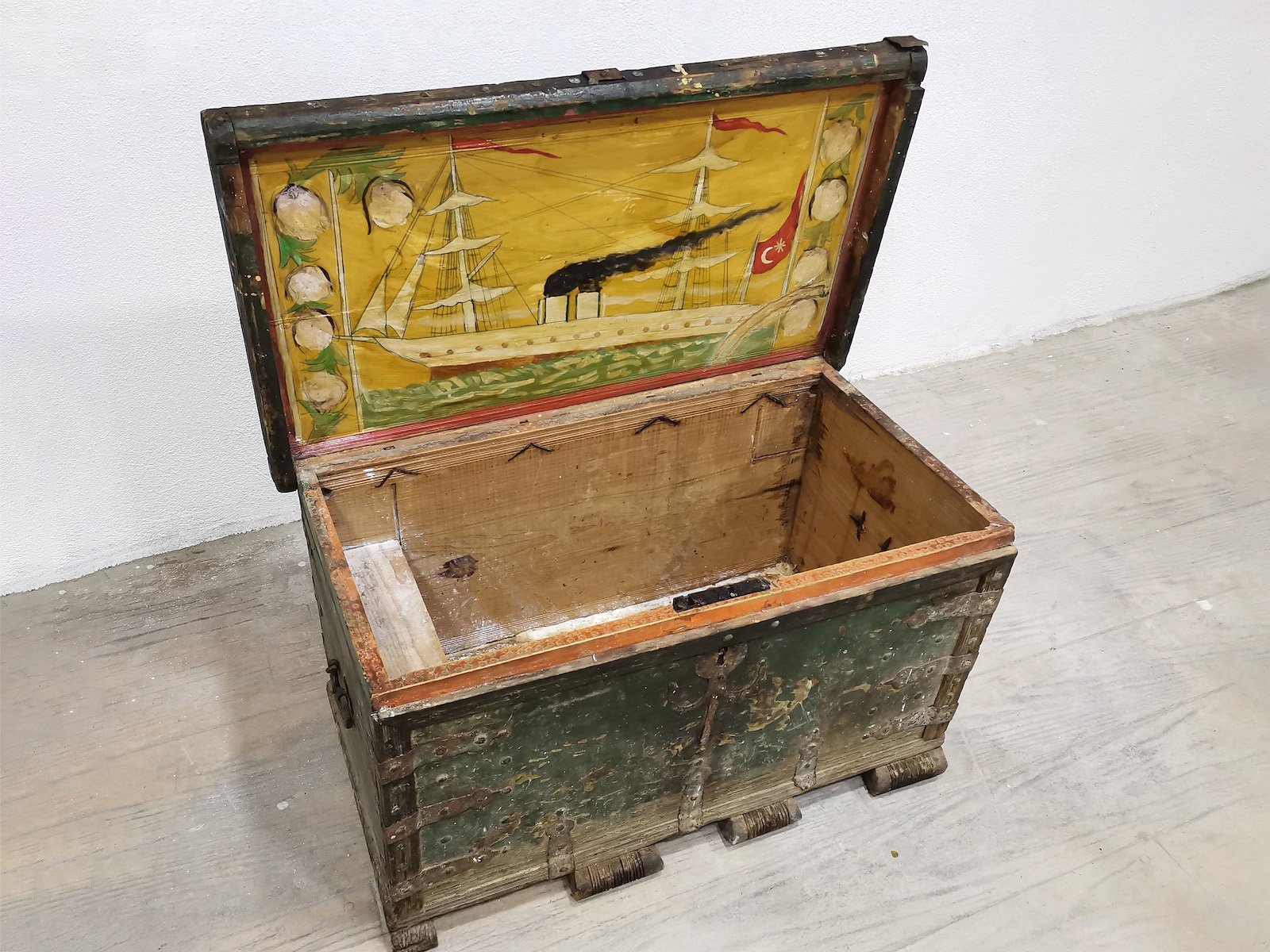
Such dowry chests mostly come from coastal regions associated with maritime trade, fishing, and military service. Among these, the Black Sea (Sinop, Samsun, Trabzon), the Marmara Sea (Balıkesir, Çanakkale), and the Aegean Sea (İzmir) coasts stand out. Examples representing migration from inland regions such as Tokat, Kastamonu, and Safranbolu to the coast are also found.
In depictions using carving, inlay, painting (mostly blue, green, red, and gold color dyes on a yellow or orange background), or burning (pyrography) techniques, we mostly encounter three types of ships: Frigate (three-masted warships capable of carrying cannons, used in the Ottoman era), corvette (vessels of 25-32 m in length, generally used to protect merchant ships), and monitor (relatively modern battleships with metal hulls). A Turkish flag is waving in every depiction. The Greek flag can be rarely seen as a trace of the migration and population exchange period. Looking closely at the depictions, we see that almost all of them have smoke coming from their funnels, meaning that the ships are always in motion.
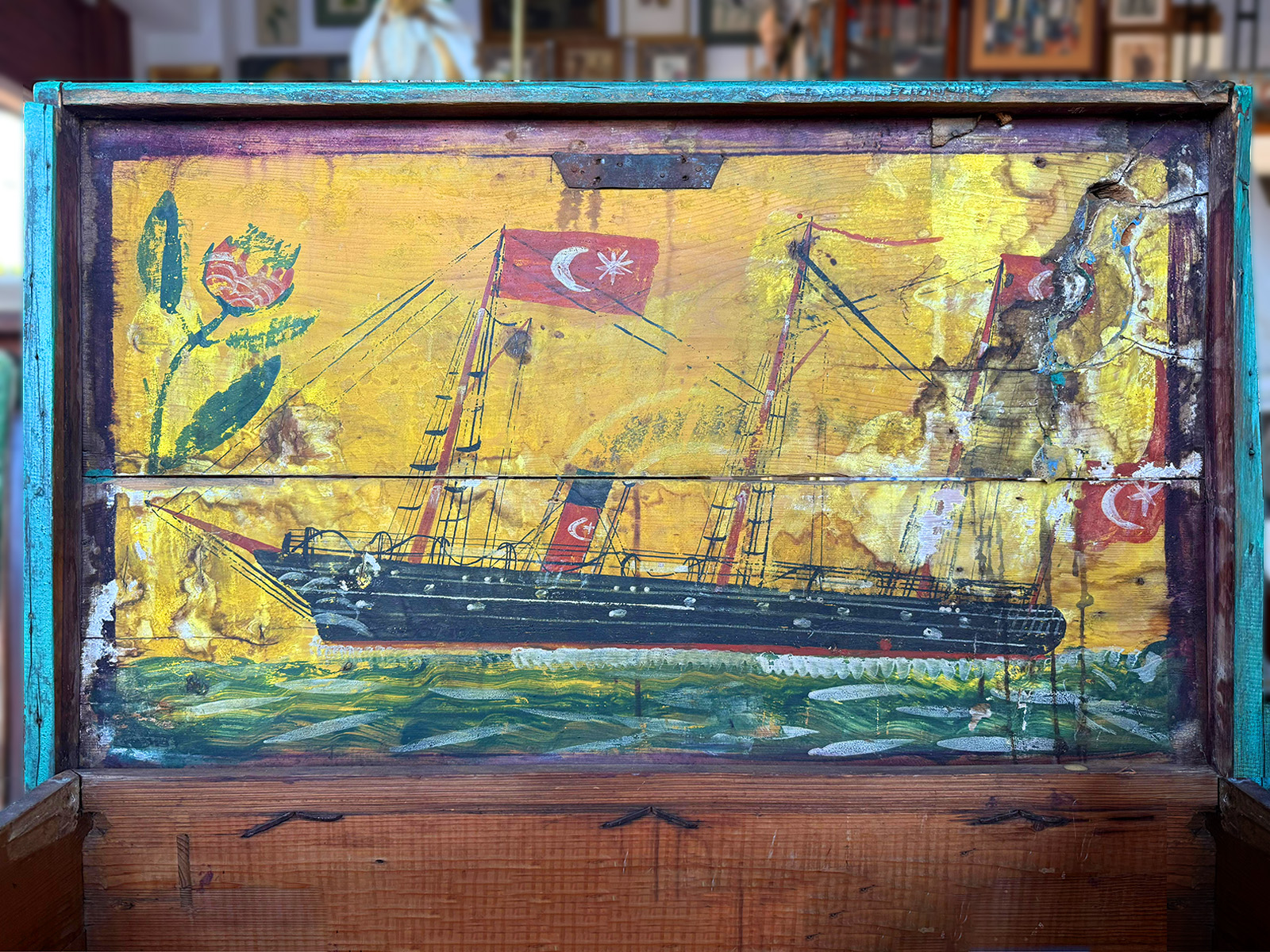
It is possible to make different interpretations of the meaning of the ship depictions on the chest lids. Above all, these depictions symbolize the bride leaving her father's house and embarking on a new life. Since ships were seen as symbols of power at that time, it was believed that the ship carved on the chest would give strength to its owner and make the marriage durable. Ships were also symbols of trade and prosperity. The ship depictions were expected to bring abundance and prosperity to the new home. It was also believed that chests would bring good luck in marriage because ships symbolized good luck and fortune for sailors. It could also be said that some chests were made out of longing for a spouse or father who had gone to sea.
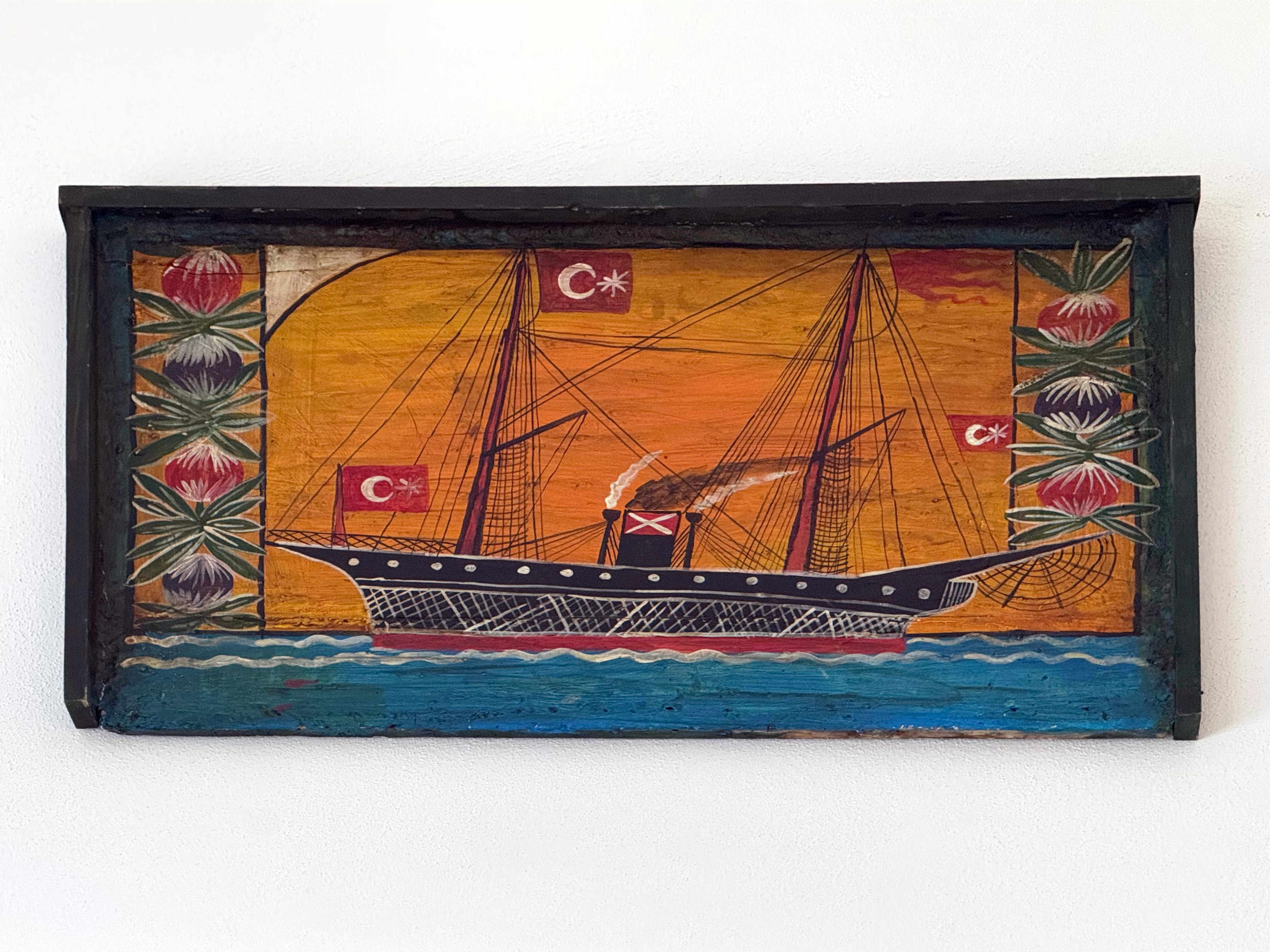
Framing the ships with floral motifs transforms them from harsh, technical objects into something closer to the bride's aesthetic and emotional world. In addition to flowers, wave, fish, and bird motifs are frequently encountered. These depictions are somewhat reminiscent of the wedding cars that appeared in later years.
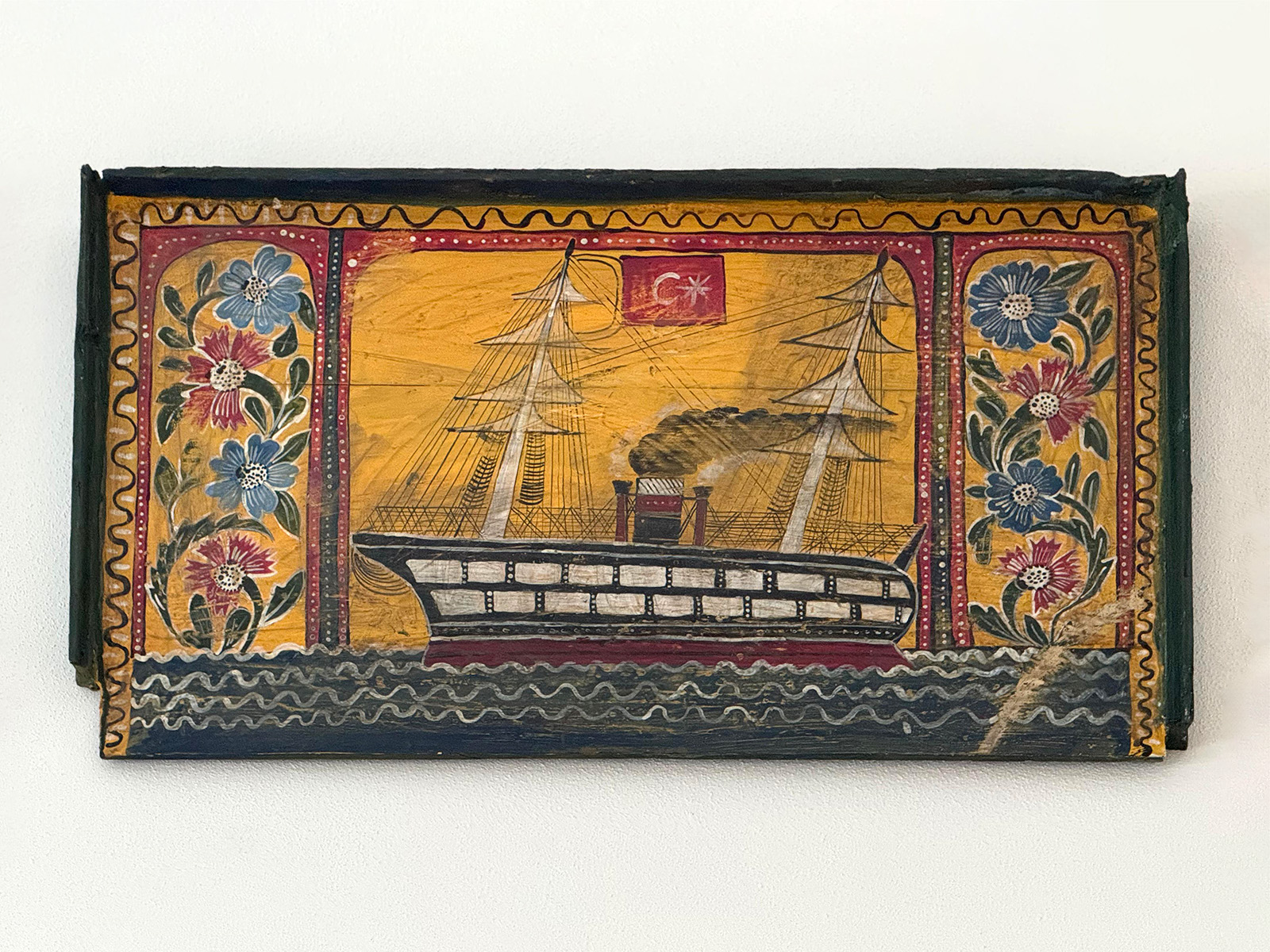
The motif of the Turkish flag (especially with the eight-pointed star) on ships not only conveys national identity and loyalty to the state, but also carries meaning as a reflection of the political atmosphere of the period in folk art. Particularly after the population exchange period (between 1923 and 1925), depictions of ships began to appear more frequently in dowry chests in the folk art of the Aegean coast (Ayvalık, Foça, Urla, and areas where Cretan immigrants settled). Chests stand out as both an image of loss and salvation. With the population exchange, artisans from Rumelia and Crete who came to Anatolia introduced a new style to woodworking and chest making. These craftsmen sometimes depicted the ship in a Western style (sailboat, harbor scene), and sometimes in a naive folk style. For this reason, some dowry chests from the post-population exchange period bear both the traditional Anatolian style and Aegean–Rumelian influences.
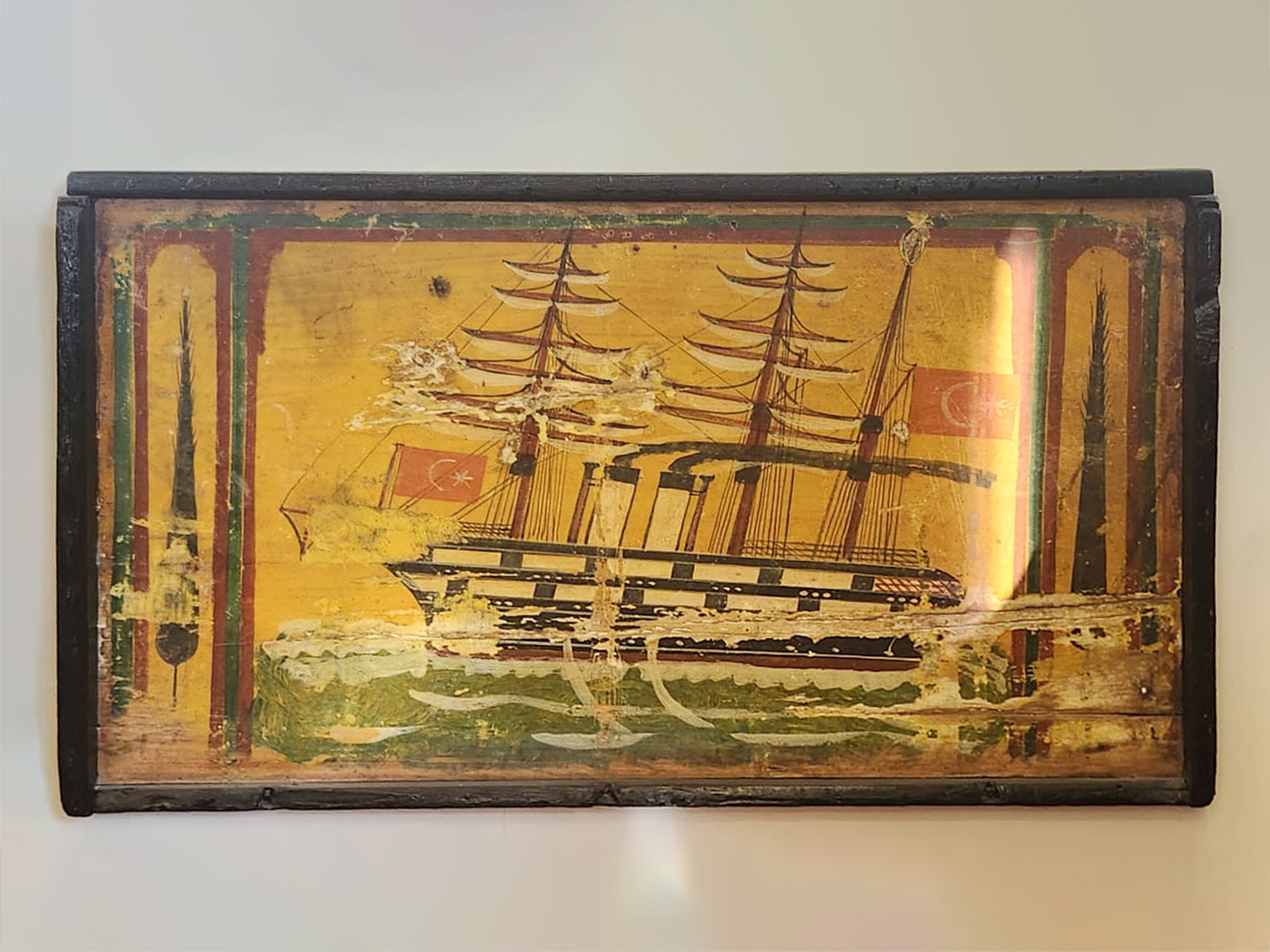
The depictions of ships on dowry chests are little-known but highly original examples of folk art worthy of further study. For these chests carry not only dowry items, but also the dreams, hopes, and identity of their owner.
Photographs: İlkfer Maritime Museum, Setur Marinas Ayvalık Bazaar Shop