

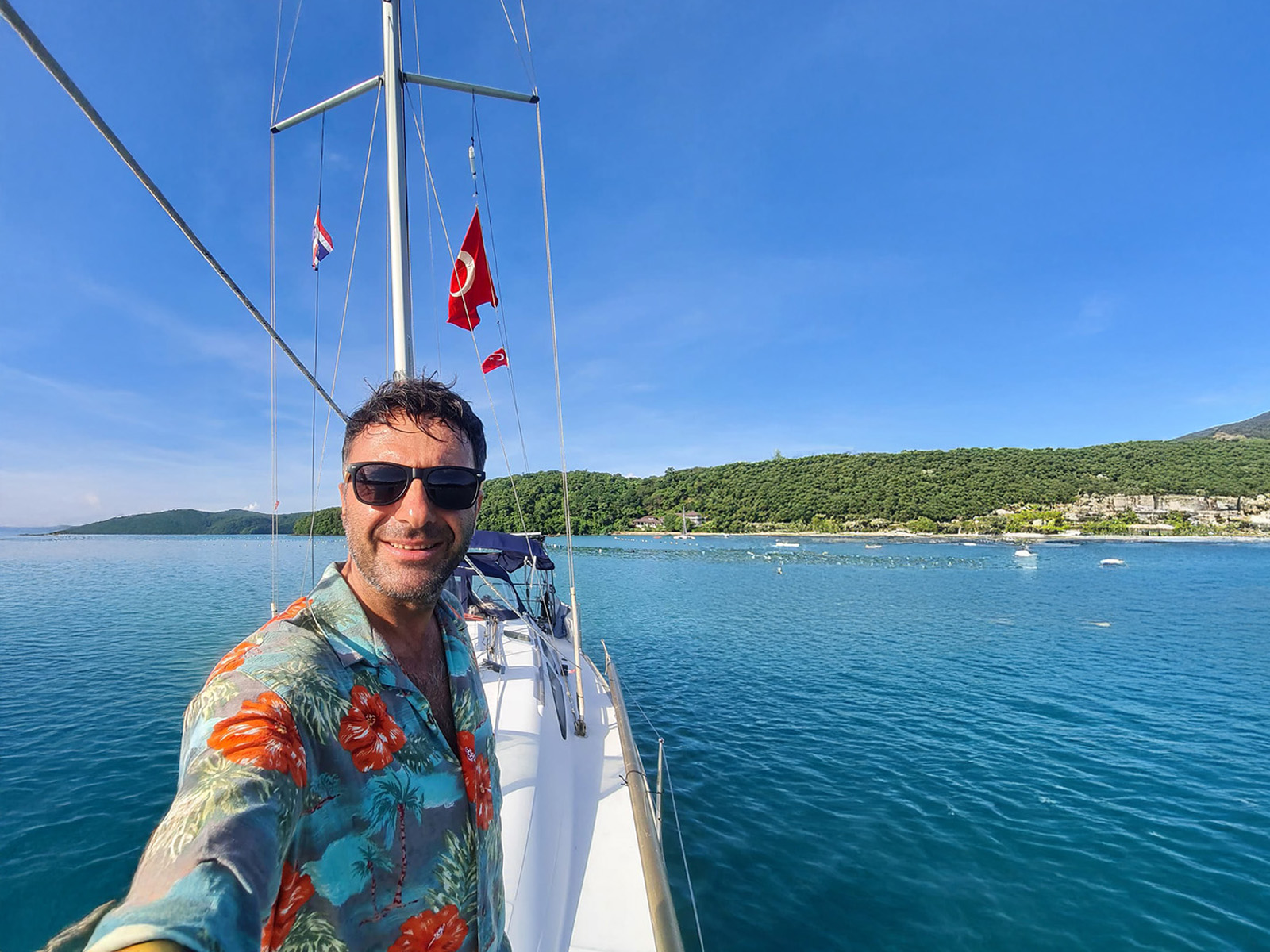
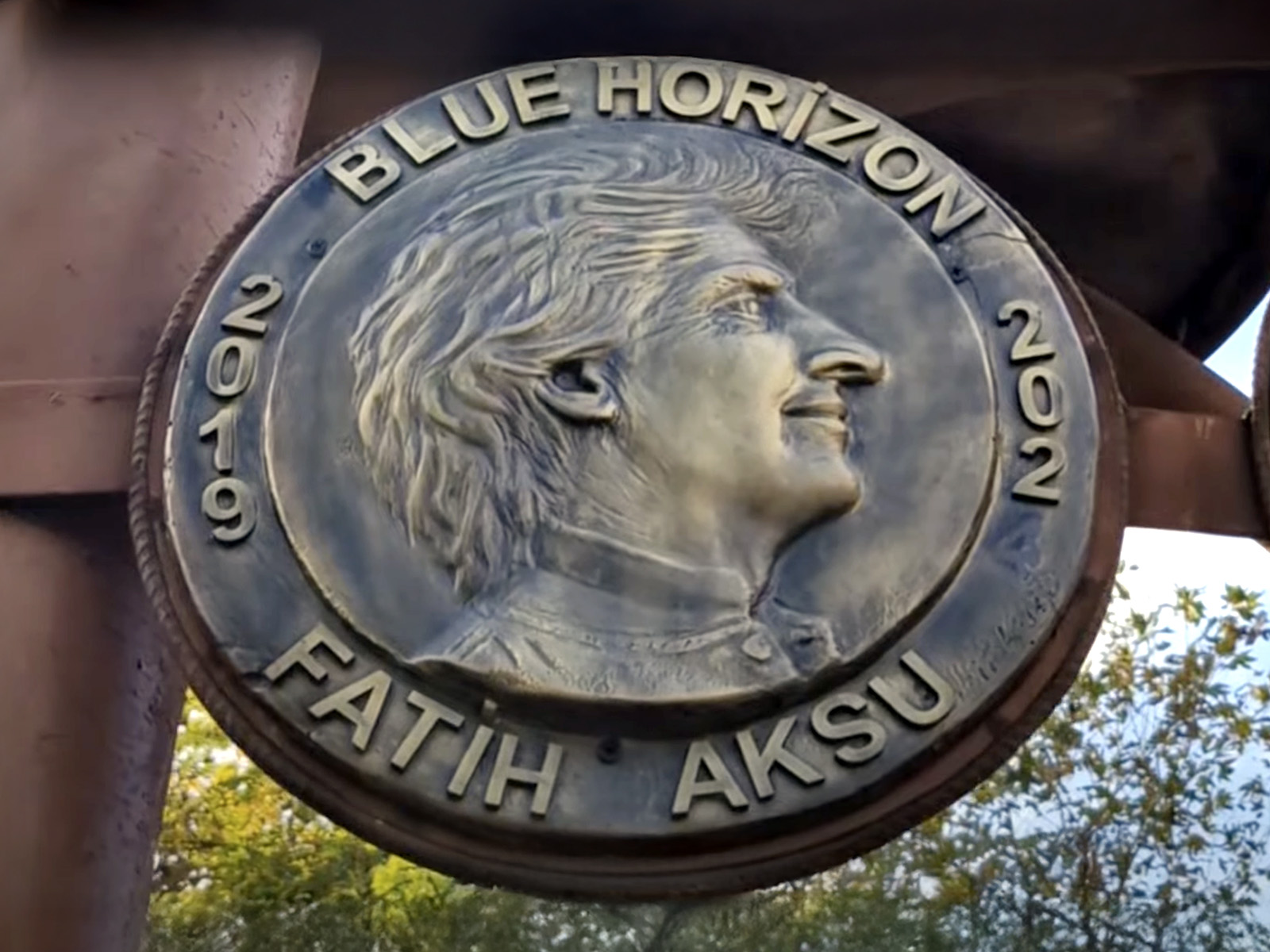
Fatih Aksu is the captain and sole crew member of Blue Horizon, the 22nd Turkish sailboat to circumnavigate the globe. He is the second Turkish sailor, after Haldun Karagöz, to complete this tour on his own. Although Aksu set out on this journey alone, thousands of people traveled with him for five years, watching the videos he shared on YouTube. Everyone had a bit of a tour of their own thanks to him.
Aksu is an industrial diver, a boatman, but we could call him a modern dervish. Hearing the whispers of his heart, standing up in the face of challenges, not giving up on his own path no matter what, but perhaps most of all, keeping hope in his heart and a smile on his face has given him the opportunity to experience the greatest joy bestowed upon human beings. The pleasure of living life as if it is an exploration and not a task!
We discussed his world tour, maritime culture and the future of the seas with Fatih Aksu. This is the first part of our interview, which went too deep to fit into a single piece. We will pick up the conversation where we left off in the next issue of Highlights.
Kayhan Yavuz: Greetings, Mr. Fatih! I was hoping to see you on land this time, but you are on the boat again.
Fatih Aksu: Hello. I am currently in Bozburun, at open sea. I have been on the boat since I arrived.
KY: We exchanged words about three years ago, when Highlights was just at the beginning of its journey, when you were halfway around the world. You were in French Polynesia at the time. You did not refuse us and sent a special message to Highlights readers.
FA: Yes, you were at the very beginning. Now you are at issue 13.
KY: It has been a long time, but the goal has not changed. We share content that we think will contribute to our maritime culture in Highlights. In fact, it is one of the topics I would like to discuss with you today. Both your world tour and our maritime culture in general. What are you doing in Bozburun?
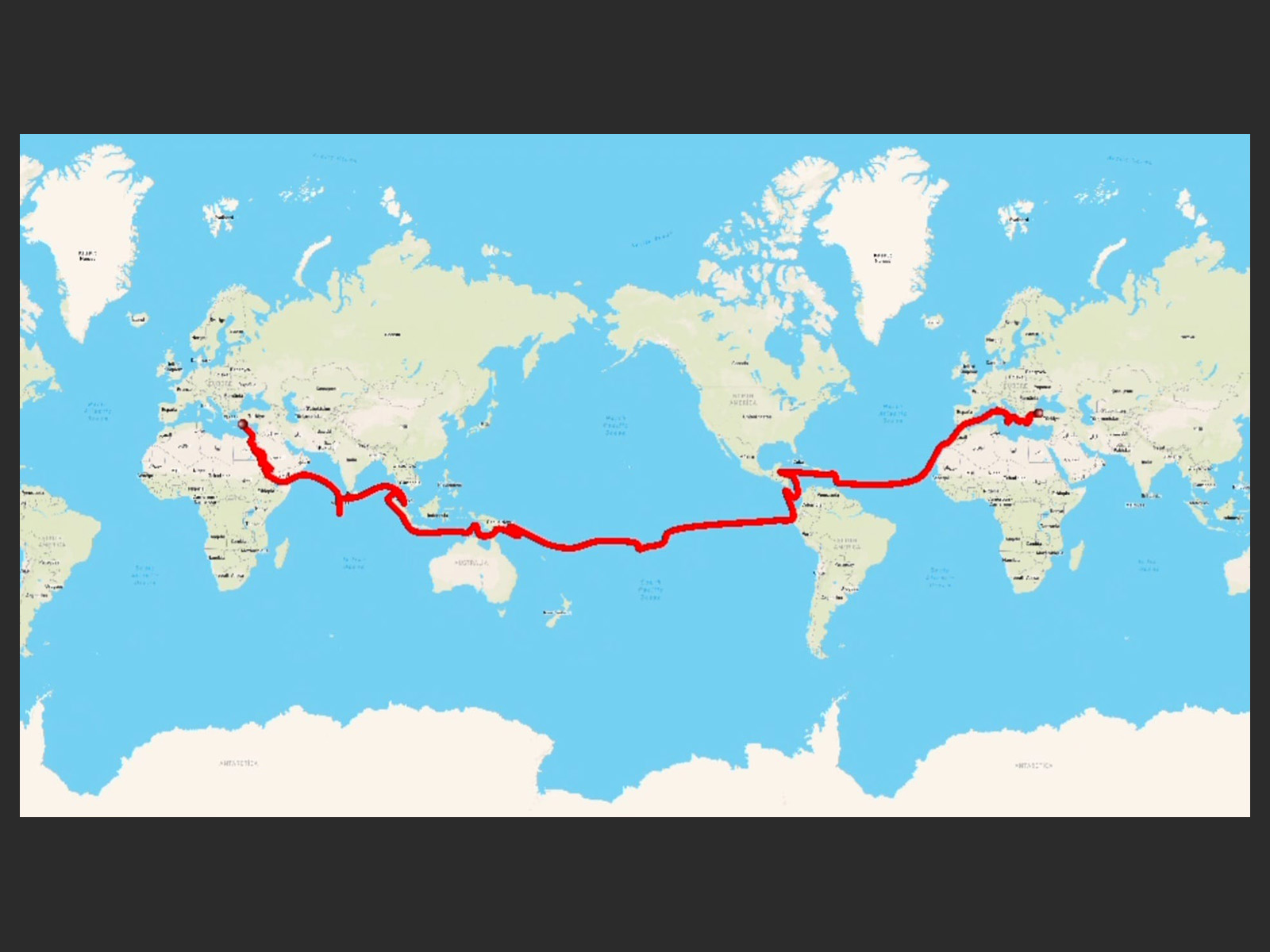
FA: It has been 11 months since I returned to Turkey. But my journey is not yet over. I am currently writing a book on my world tour. The journey will be over whenever the book is done.
KY: Have you always had the idea to write a book?
FA: I was on a world tour for five years. I wrote a diary every day on the journey, never missing a day! I wrote from the day I started until the last day. When I was writing the diaries, I was saying that if I return to Turkey, that is, if I manage to return, I will anchor in Datça and write a book of the journey from these diaries. But I will definitely write it on the boat.
KY: Then you have only completed the route, not the journey.
FA: Yes, exactly. We have completed the tour. The boat's wake merged in Çanakkale. I am back to where I started, but my world travel will only end when this book is finished and published.
KY: Then what?
FA: Then maybe I will live a little bit on land, a little bit on a boat. Maybe I will go on a Mediterranean tour.
KY: Why does this journey have to become a book?
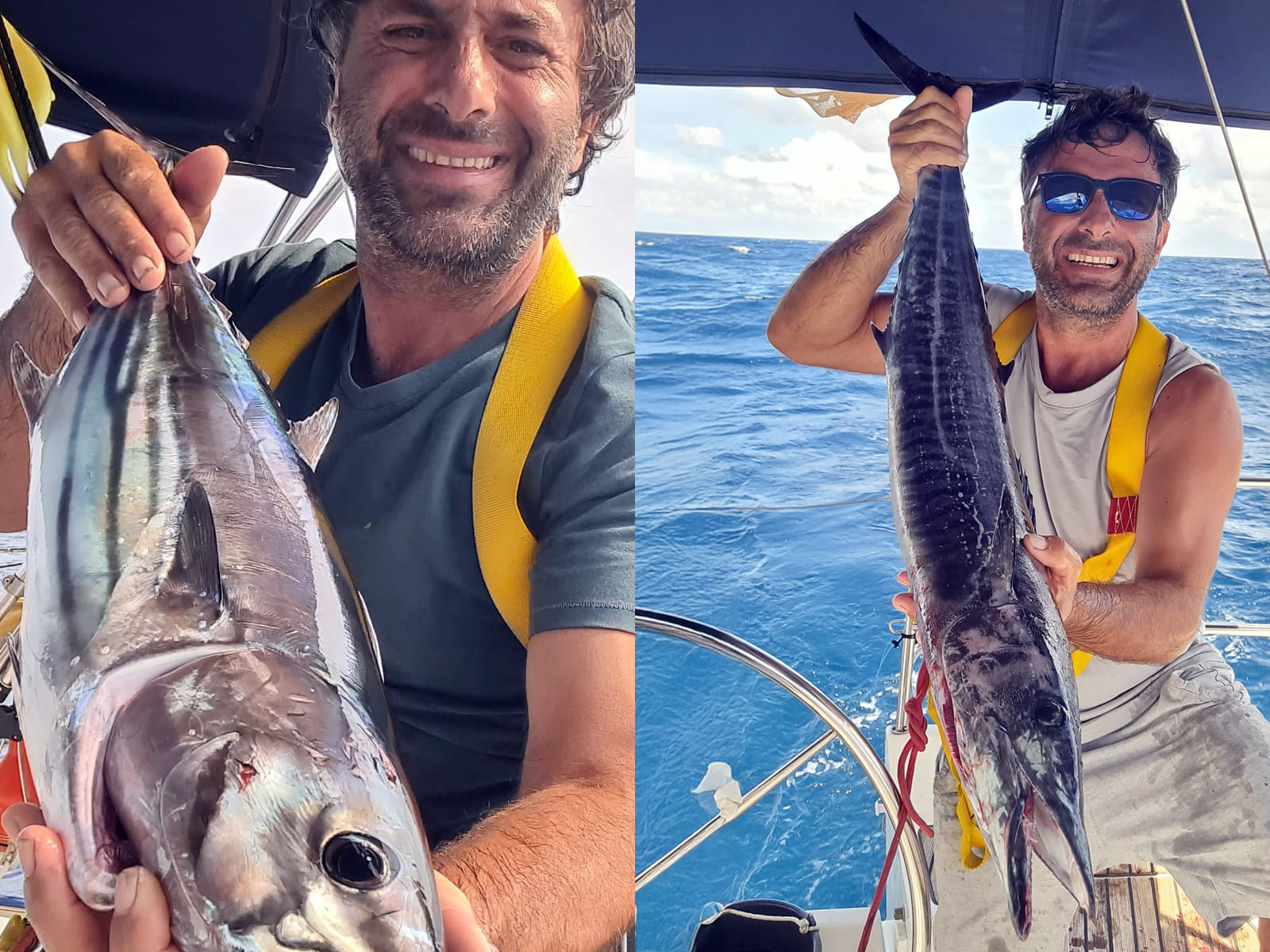
FA: I recorded 405 videos on my trip around the world and posted them on YouTube. People saw and watched in the videos everything that a traveler going around the world, going through storms, traveling around the world experiences. The book is about the emotions and thoughts that are not captured in those videos. Like, for example, you see a whale, you take a video. There comes a storm, you take in a reef. You meet people, you say, look, this is how Guatemalans dance. You show it in the videos, but you are not expressing exactly how you feel.
KY: So this book will be about what is going on inside you as much as what is going on outside.
FA: It has my inner world. It has my challenges with the boat and the sea. It has cultures and people. It has so many things! I have already written 550 pages, but I can write another 550 pages. For example, I am currently writing about the COVID times. I am in Antigua and suddenly the island is silent, as if there had been a nuclear war, and I am stranded.
KY: It is important that this is on record, right?
FA: Years ago, I had visited a maritime museum in Long Island, New York. A museum like the Rahmi Koç Museum in Haliç. There are many important pieces in the museum, of course, but on the upper floor, up a wide staircase, there is a library full of maritime books. Thousands of books! Books on shipbuilding, cartography, biographies with true stories... an incredible treasure! That library was always on my mind while I was on the world tour. There used to be Denizler Kitabevi (Bookstore). Now it has set up a website called Naviga Deniz Kütüphanesi (Maritime Library). It should be the same in Turkey, there should be more books on maritime issues and there should be more resources. I would be happy if I could contribute a little with this book.
KY: Yeah, it is like writing is the other side of traveling.
FA: Sadun Boro too would always advise those who sailed to write.
KY: When it is written, it becomes recorded, definitive, indestructible. Even if only a copy remains somewhere, your story will continue to inspire someone. Did you set out with the idea that you would do this under any circumstances or was it a bit spontaneous?
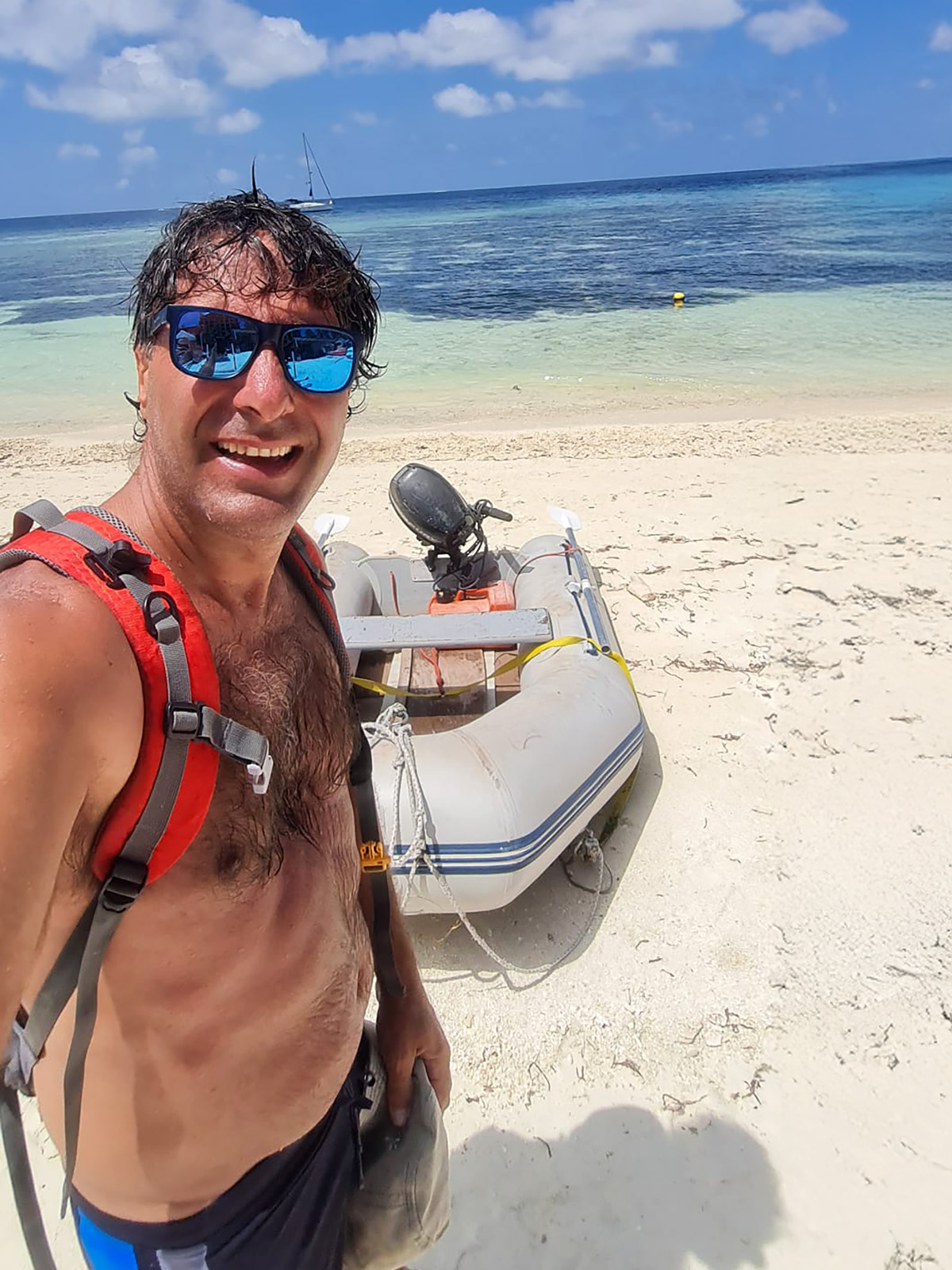
FA: My boat is not meant for the ocean! For example, it does not have a powerful autopilot, no water maker, no spare sail, no storm sail, not even an inflatable life jacket. So it is a boat that is missing a lot. Its rig is not fit for the ocean. On top of that, I was a beginner. I had been a sailor for just a year then. I had no boat experience other than the experience I gained by traveling around the Marmara Islands. But I was off! I gave myself a deadline until Gibraltar. I said I would check both myself and the boat. Ömer Kesimal, my flat-mate, visited me in Gibraltar. He said "I wanted to meet before you set out to the Atlantic". I told him: "Ömer, I came to this point with 'what ifs', but there is no stopping for me now". And that is what happened!
KY: Well, did you at least cover the boat's shortcomings in Gibraltar?
FA: No, I continued without them. The satellite telephone, for example, I got one from the Canary Islands, due to pressure from my friends. I had one radar, and it broke down in Costa Rica. Then I went three years without one.
KY: Well, you are a seaman, a professional diver.
FA: Yes, I spent my life at sea, there is no doubt about me being a seaman. But I am not a sailor. That is something else! I learned that on the journey. I faced violent storms, I ran aground on the coast of Spain, and I went into the rocks. For example, when I was approaching the Balearic Islands, at midnight, I was going to be slashed by a trawler at 30 meters from the port aft shoulder. I survived that. In short, I provided whatever the boat was missing. And the boat provided whatever I was missing. By the time we reached Gibraltar, we had formed the totality to cross the Atlantic.
KY: You are saying "we". By that, you mean the boat and you. You were actually on your own.
FA: A boat is a man's faithful friend. Blue Horizon is my faithful friend. I cannot imagine the two of us separately.
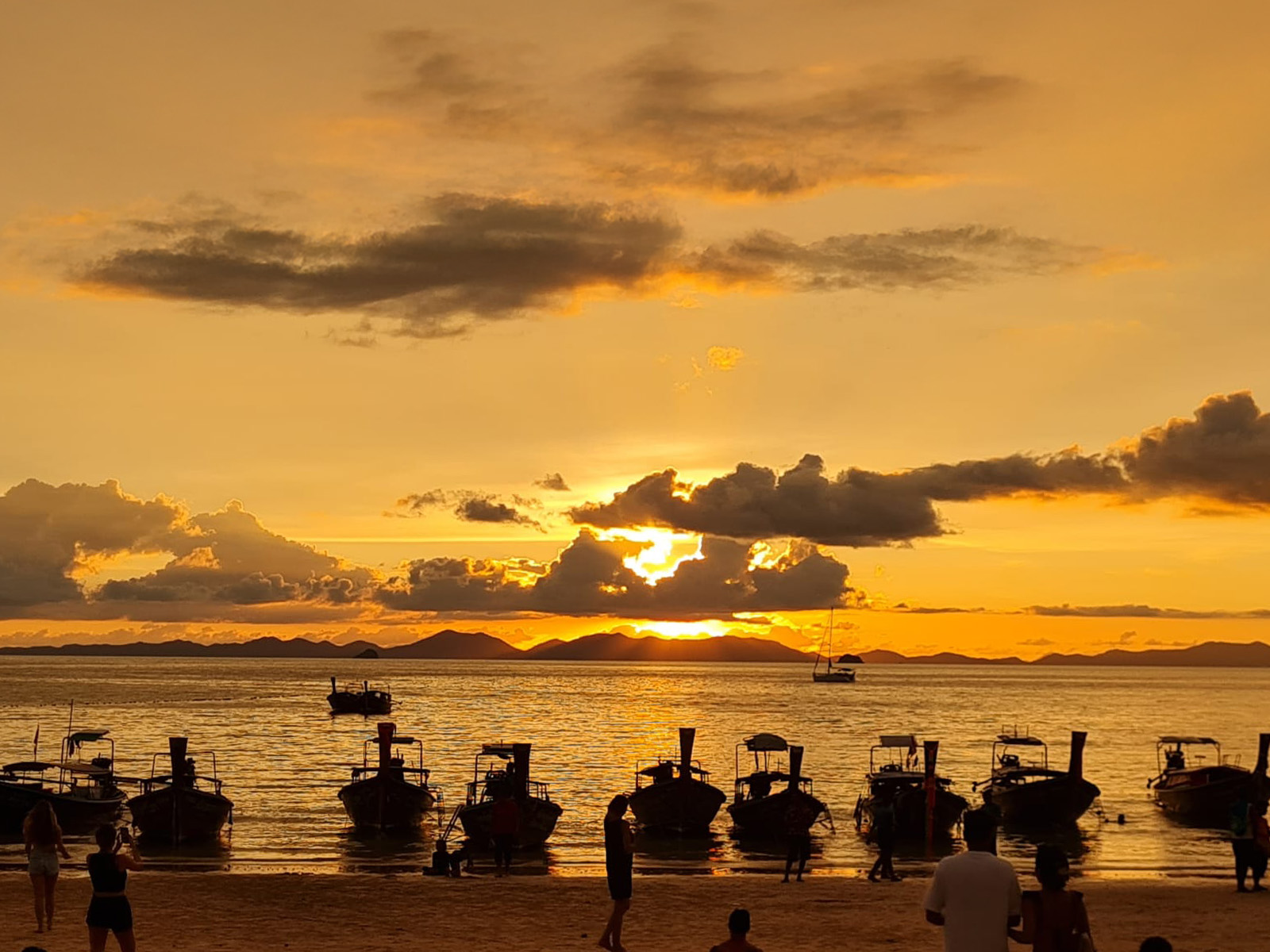
KY: I believe the classic route for the Atlantic crossing begins in the Canary Islands. Why did you choose to go through Cabo Verde?
FA: Yes, that is the classic route, especially for powerful boats. But not only will you be tacking, the route will also be 500-600 miles longer. But I preferred the Cabo Verde crossing both to be safe and to shorten the route. Also, when you turn to the West, to the Caribbean Islands, you get the wind from the starboard aft shoulder, broad reach. And that does not put a load on the autopilot, on the boat. The boat rocks less. Basically, I went down to Cabo Verde and passed through Mindelo in order to catch the angle and also to hop from island to island, splitting the distances. I also met my girlfriend at that time, with whom I am in love. So, I was quite late. Everyone had left and I was the last one to leave. I was able to leave on January 12th or so. I crossed the Atlantic in 18 days and reached the island of Barbados.
KY: And when you crossed the Atlantic, what were your thoughts?
FA: Well, exactly those... I thought the world was over for me. I said I would just live from then on. By then I had seen both the boat and myself, I had reached the end of the Indian Ocean in my head.
KY: You had become an absolute sailor at that point...
FA: Yes, exactly.
KY: Your YouTube videos have influenced many people. How did you come up with the videos?
FA: Well, I started the journey... I was going to the Canary Islands from Agadir in Morocco, then go down to Cabo Verde, about 850 miles. Which leaves 2 thousand miles to cross the Atlantic. That was the plan. I had posted a video of me leaving Pendik Marina in Istanbul. Then, I had a live broadcast in Agadir. I said "Friends, I have made it this far, for better or worse. I have been a boatman for a year, I have learned a lot. Actually, we have learned a lot together. I have made the decision, I am beginning the great crossing from here!" I had 70 subscribers on YouTube when I set out. When I set off for the Canary Islands, I suddenly had 2 500 subscribers.
KY: I must confess, being a filmmaker myself, the videos looked very amateur to me at first glance. But then, I loved them so much the more I watched them! On the other hand, I also had a change of heart as a filmmaker. I thought that you had found the most accurate cinematography, perhaps without realizing it. It is not easy to capture that spontaneity on a boat.
FA: I have been told that many times. When I was setting off, I told my friends that I would shoot and share everything with Turkish sailors. But what I had in mind was just a few clips. However, I continued shooting videos when they were liked.
KY: You shot 405 episodes, which have been viewed 9 million times.
FA: I was not desperate for views, but the likes on my videos never dropped below 99% for five years. I was shooting videos when I wanted, as I felt like it. I was shooting things that I thought people must see. I was shooting with a really bad telephone. But I received such beautiful messages from my subscribers. I thought that I would pay more attention to it.
KY: And what did you do?
FA: I absolutely love the Lord of the Rings. I thought, let me watch the movie, let me see how they did the transitions and such. I replicated it a little. Then the subscribers said: "there are telephones that can shoot videos without shaking, buy one for God's sake"... they were actually roasting me. I said okay and got one. If you pay attention, the videos get better after Costa Rica. But the sincerity of those videos never changed from the first video to the last.
KY: Typically, people producing these kinds of videos either cut out or edit and hide mistakes and stuff like that. So, they are actually trying to act more like professional filmmakers.
FA: We all make mistakes. Like, you pull the engine and it does not start, you did not connect the fuel line. I made mistakes and I showed them. Because there is nothing abnormal with it. I try to say this everywhere: We have to normalize some things in order to serve the maritime world. Going on a world tour should be normalized, for example. I mean, we have to show that it is possible. And to do so, we have to stop hiding our mistakes. I am not claiming it is easy, there are many things to consider. But it is also not in anyone's interest to make it look more exaggerated than it really is. Today, if you go to a fishermen's or sailor's café in France and say, 'I crossed the Atlantic by boat', no one would be interested. Because there, it is normal. It has to be normal here, too. Anyone with time, a little opportunity and a love for the sea can go on a world tour with three or four years of experience.
KY: You said three or four years. You went on with just one year of experience!
FA (Laughing): Consider it three or four years, do not follow my steps in this regard.
KY: I first came across YouTube videos during the pandemic. I believe you were caught by the pandemic in Antigua...
FA: The pandemic became a topic in March 2020. On April 1st, the Coast Guard in Antigua came up to us and said that a curfew had been declared and that we were not allowed to leave the boats. It was an extraordinary situation. Many boats were stranded there. I was talking to my friends, everyone was stranded somewhere. For example, a man had left his boat and went to the island of Saint Lucia, he could not come back. I stayed there for two months, most of which was during the curfew period. I had videos of the Atlantic crossing waiting to be edited. I could not post them as I did not have internet in the ocean. I edited them during that time. There is a shipwreck near Saint John. Wreck of an old steamer cargo ship. Lying at 15 meters, in clear water. Oh, how beautiful it looks! It is a huge shipwreck. Schools of fish roam over it. You anchor and dive with a mask and flippers. I was actually going to stay a little longer in Antigua, I was having a good time. One day, I thought that I should check the weather, which I had not done for a while. Next thing I know, a hurricane is coming, and it will hit Antigua in two days at 95 knots. I immediately weighed anchor and fled to the South.
KY: You were moved by your intuition. It is important to trust your intuition on this kind of journey, right?
FA: Intuition is very important. Because no matter how much you plan, there are events beyond your control. Let me give you another example: I was in the Indian Ocean, south of Malaysia. Between the two islands, there's a 7-mile to 9-mile counter-current. The speed of the boat is only 5 miles an hour. So when the tide starts to rise, it pushes me back 2 or 3 miles. So I had to cross the thousand-mile island of Java to the south. It is half the size of the Atlantic Ocean, that big. I set an alarm every half hour, sometimes every 15 minutes if I am close to the shore in the open sea. I sleep and wake up every 15 minutes. If I am completely out in the open, I check the surroundings every hour, at night, if there is no light, if no other boat is visible, I go back to sleep. There are some small islands in the south of Indonesia, I was going to visit them. I set the telephone's alarm for 15 minutes at night. In the middle of sleep, I jumped up, feeling a sense of awakening. We were pretty far out in the open in the south of Malaysia. The nearest land was 20-30 miles away, and in that moment, I did something I had never done. Without even checking the surroundings, I immediately looked up the location of the boat on the map on the telephone. I saw that the boat was about to hit a small islet! About 50-60 meters left. I immediately started the engine, made a turn, moved the boat out of there and got back on the route. The boat went north on with the currents and went over that island.
KY: Did the autopilot not work?
FA: There is autopilot, but the current is a different thing. I mean, the autopilot will guide you on a line, but it will drag you, for example, to the north. That night I woke up with those feelings and saved the boat. After that, I traveled on routes in shifts, checking both the surroundings and the map. But I have to say that the longer you live in nature, the more you become one with it and all your perceptions open up. In other words, you become more intuitive. I can tell by the hairs in my ears that the wind has started.
KY: So you rely not on the feathers in your sails but on the hairs in your ears.
FA: The hairs in our ears are so good at it.
KY: Well, but is it not exhausting to be awake all the time? I, for example, consider this side of it the most difficult.
FA: Everyone has a different challenge. Yours is sleep, most people say loneliness. They say they cannot stand loneliness. Some are afraid of breakdowns because they do not know how to repair. We actually have very strong instincts. They emerge in such difficulties. Suppose you have a sleep problem. Before you know it, you will have learned to survive on little sleep. You will see that you can stay awake for 5 hours with 5-10 minutes of sleep in nature. That is how powerful a machine man is. City life makes us forget this power. Fears start to replace those skills. We actually have a great survival energy. We are living in cities without being able to feel it. I once navigated in ship traffic in the Strait of Malacca for 4 days when the autopilot broke down. You are always jibing because there is no autopilot. I close my eyes and count 1-2-3, up to 100, then I sleep. Then I navigate the route for another 5 minutes. Because you are passing out from sleep at that point. But it comes to an end. It becomes daytime, your visibility increases, you lie down and sleep. I had the craziest dreams in those short one-minute naps. I was acting in a movie with Mel Gibson in one of them. We were diving, a volcano erupted underwater, spewing us to the surface.
KY: This dream is obviously related to your diving background. I guess that was an advantage for you...
FA: I was an industrial diver for 27 years. I have been involved in many major naval constructions and naval operations over the years. You always dive in those jobs with huge risks. There is excitement below, excitement on deck. Crises lasting months. The end result is a great work of art. You forget about everything and feel a great sense of pride. I developed the ability to stay calm under stress thanks to diving. It is very important in sailing. Sometimes you fail to recognize a very simple solution due to panic and you can suffer a huge loss. So calmness has always been an advantage for me.
KY: You were alone on your world tour for many long hours, for days, if not weeks. But when you talk to the camera in the videos, it is as if you are never alone. It is like there is actually someone and you are talking to them. I feel like one has to have very strong ties to feel this way in the middle of the ocean. Did you feel like you were actually not alone?
FA: I get this a lot. In fact, a subscriber told me that they bought a boat because I aspired them. They set out from Fenerbahçe marina and went to Büyükada on their own. They anchored at a cove and after a while, started getting bored. They did not like it and went back. I am a believer. There is a creator of which we are a part, I believe that. For me, that creator is the life itself. In other words, we can say life itself is the creator itself. All living things in the sea, in the sky, on the ground, we are all part of life. Like a part of the God. I traveled the world believing in this, feeling like a part of a whole. It took me 44 days to cross the Red Sea. 44 days on my own. I was caught in a storm off the coast of Egypt. The storm lasted for a week, I did not see anyone for a week. Yes, loneliness is very scary for most people, but it has no effect on me. I love loneliness, I love loneliness and quietness. I can stay alone for a long time. I am also a very social type, I make friends immediately in the countries I visit. That is how comfortable I am. There were also comments on the videos all the time, I was always interacting with the subscribers, I was also in touch with my friends. I have actually never been properly alone in my life. But during this journey, I enjoyed the loneliness as much as anything else. One can also sometimes be lonelier in a crowd. Because intellectual, mental loneliness is the worst.
KY: Then there is a more philosophical, existential side to it. It is, as the cliché goes, a search for meaning. It seems to me that without this kind of motivation, this cannot be done.
FA: Do you know what I was searching for? I wanted to regain the joy of living that the recent depression of the country had stolen from me, that it had drained out of me. I was exhausted and I asked myself: "Fatih, what would make you happy?" I kept asking myself that question for a year. This was the answer: A boat would make me very happy. It was my childhood dream. When I remembered that, I decided to shut down the company. I bought Blue Horizon with what I had left. My joy of living came back at that moment. I started dreaming again. Then I set out.
KY: "What would make you happy?" So, before anything else, one has to ask oneself this question!
FA: Yes, that is the question. You have to honestly ask yourself this question and answer it as frankly as possible.
(To be continued...)
Interview: Kayhan Yavuz, Setur Marinas Highlights Editor