

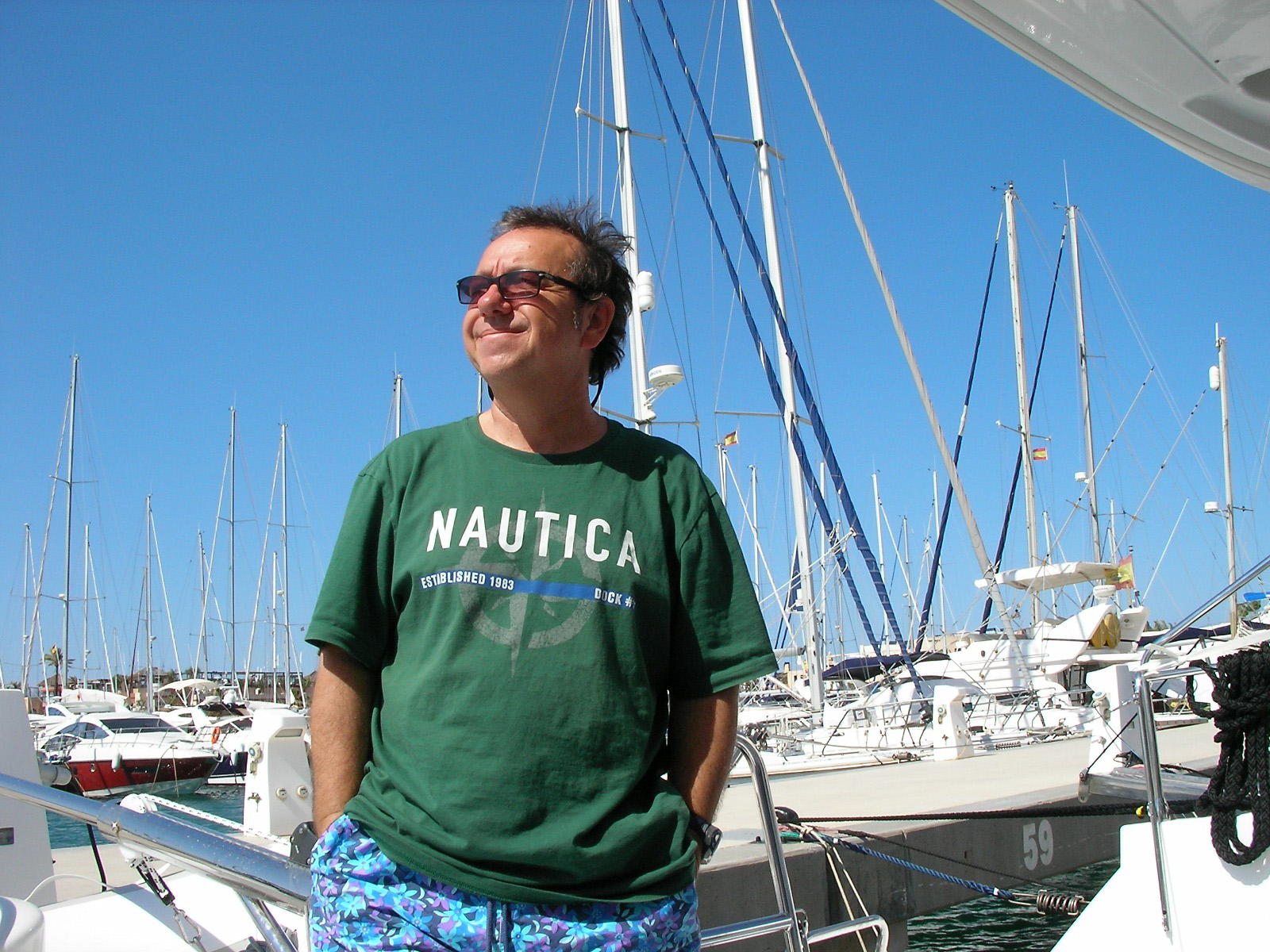
There are some people whose names make you smile. Undoubtedly, Gani Müjde is one of them. An author, cartoonist, screenwriter, film director, and TV producer who has dedicated his life to making people smile. He finds something to laugh about in every situation. He mostly laughs by himself. Considering that he was also a sailor, we can guess what he has learned from his experiences at sea. Or instead of guessing, we can listen to him.
Kayhan Yavuz: There are some people whose names make you smile when you hear them. Even if you don't recognize them or know much about them, just hearing their name is enough to make you smile. I think you are one of those people. How do you think this is possible?
Gani Müjde: I have a saying: "If you don't know how to smile, don't open a shop!" I use this motto every day. That's where it all begins. You see someone coming towards you on a dark street, and you feel uneasy; if they smile, you smile back, and suddenly that uneasiness disappears. It is the act of laughing that establishes trust between two people. I guess people sense that I'm ready to smile at them.
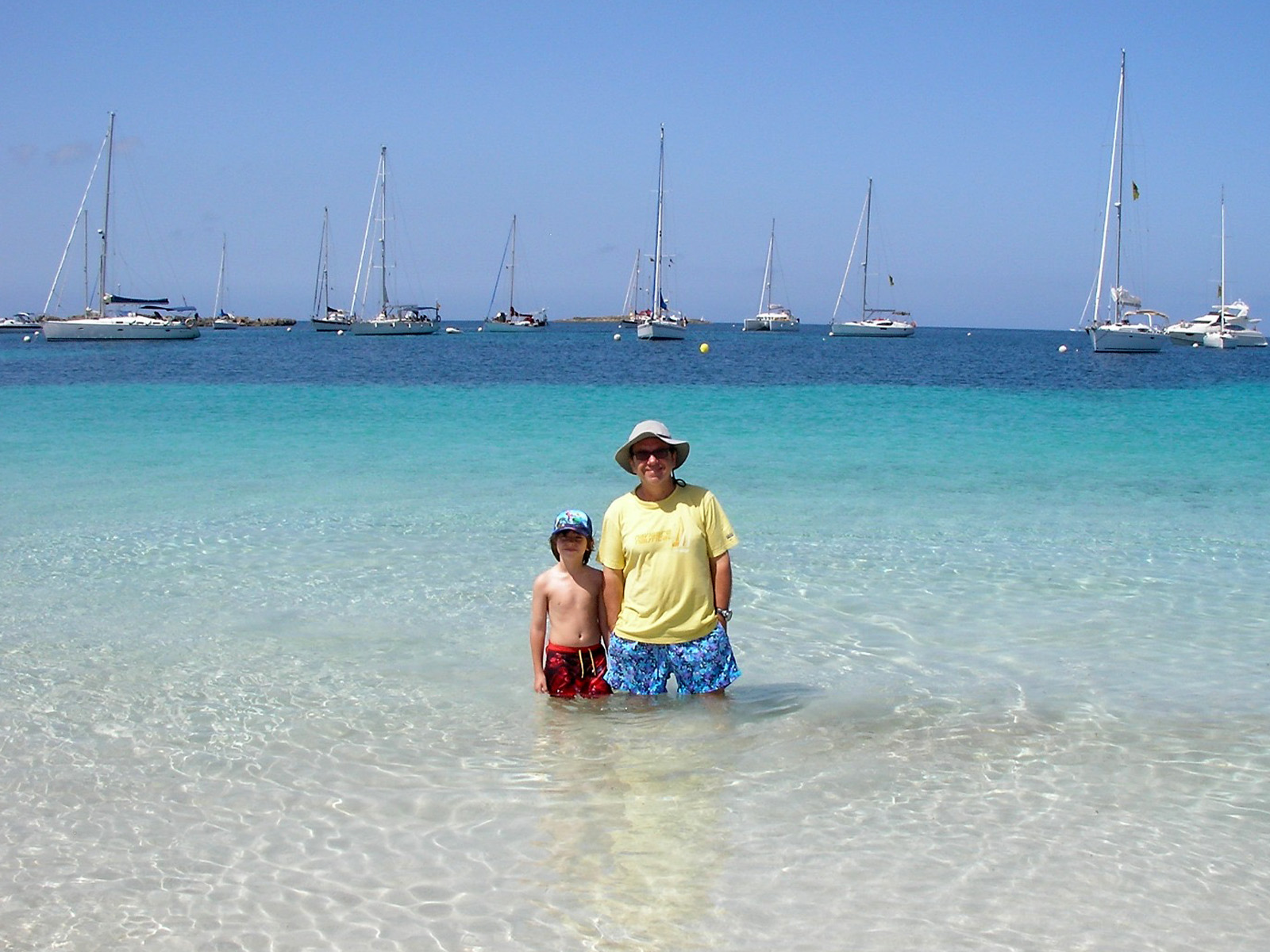
KY: Are you always ready to smile?
GM: Mostly! I'm actually a bit thoughtful and worrywart too. But I'm very cheerful when I am the right mood. My adrenaline is having fun. For example, when we're working, at some point our company meetings and script meetings turn into irresistible gales of laughter.
Personally, I believe that smiling plays a very important role in both social and individual life. In fact, I've made many calls to politicians: Open up channels that will enable society to laugh! There are many drama series on television, which make society even more pessimistic and hopeless. If only they watched more comedy series and went to bed in a more cheerful mood, the electricity hike, water bill, and phone bill wouldn't hurt so much.
KY: Can people smile at anything?
GM: Yes, we can laugh at almost everything. In fact, the worse it gets, the funnier it becomes. I can find humor even in the worst situations. You know how they say, "Can you even make jokes here, bro?" We have a WhatsApp group with our old Gırgır team, the cartoonists. There are so many things we make fun of... Starting with ourselves! So if someone dies, we'll joke about it for at least two days afterward. Why? It's because laughing heals! This is something that greatly improves a person's mental health and psychology. That's why I recommend it to everyone: Don't watch dramas, watch humor and watch comedy.
KY: What was the last thing that made you laugh?
GM: They sent me a tiny post this morning, I died laughing! A British comedy, a wonderful piece… A man is arguing with his wife in a bank queue. His wife accuses him, saying: "May God curse you, you couldn't even earn money, you're a loser, you're a petty man. Why did I marry you? I wish I hadn't!" They're both old guys. Suddenly some robbers break in. One of them says, "This is a robbery!" and takes the elderly woman hostage. "If you move, I'll shoot!" he shouts. Then we see the woman's husband, starting to dance... I laughed at this for an hour.
The other day in Bodrum, I was going to the marina, my car wasn't available, so I decided to take the minibus. I got on the minibus, and it was very crowded. I was getting off at the Bitez crossroad, so I called out to the driver. The driver turned slightly toward the back and recognized me. He was all like "Mr. Gani, thank you for honoring us with your presence on our minibus!" Well, I started laughing. "Oh, don't mention it," I said. But I enjoyed it so much!
KY: Did he ask for fare?
GM: I had already swiped my card when boarding. But he probably wouldn't have asked it.
KY: You studied cinema, but you started filmmaking a bit late. First you worked in comedy, cartooning, television... So you have a lot of caps. But you also have a captain cap. How did you put it on?
GM: There's more to it before the cap. I grew up in Fener-Balat. You know, I grew up surrounded by the sea. I've witnessed many sad and happy sea stories there. There was, for example, a park in Fener, and when we went to that park, we used to see İpar's ships. Such large ships were the vessels of ship-owner Ali İpar. After the 1960 coup d'état, they had moored those ships in the Golden Horn. The young people used to jump into the water and swim to those ships. Well, I was younger. Watchmen from the police station used to come, collect the clothes, and leave. The young people couldn't find their clothes where they had left them. Then when they went to the police station, they probably gave them a small gift, that's how they returned them back. So they wouldn't go to İpar's ships again.
Most of the stories I heard as a child were about shipwrecks. You know, like, this guy's dad disappeared at sea, or that guy's dad was a sailor, went away, never came back. One fell out of the boat while crossing from Hasköy to Eyüp and died. But on the other hand, being close to the sea, seeing the boats, constantly taking the Golden Horn ferry from Fener and going here and there... These things made me feel close to the sea.
When I was young, I used to rent a rowboat from Yenikapı and often go out to sea. I always had notepaper by my side. In that calmness in the middle of the sea, I used to come up with cartoon topics. Those moments felt like therapy to me. Owning a boat came much later.
KY: How did that happen?
GM: I was 28-29 years old. While writing Cem Özel's stage shows, one day he said to me, "I'm setting up a shipyard, building myself a ship. Why don't you,” he continued, "do something too". I asked, "What should I do?" He replied, "Go buy a boat or something". He put that idea into my head. Then, in Caddebostan, on land, I found a 5.5-meter boat: A Starboat. It's got a half-cabin like that and an outboard motor in the stern. I liked it, so I bought it. Then I launched it to sea. But as soon as it was put to sea, it sank because its bottom was full of holes.
KY: They say you shouldn't buy a boat on land.
GM: That's how we've learned it too. Anyway, we got the boat out, pulled it ashore, but I've lost the interest. I sold the boat to a friend of mine. He couldn't use it either, and it rotted away in front of his house. A few years passed by. I got rich again. Now I can't remember its make, Bavaria perhaps, but I forgot the model. Small motorboat, American-made, I bought one of them. It didn't sink!
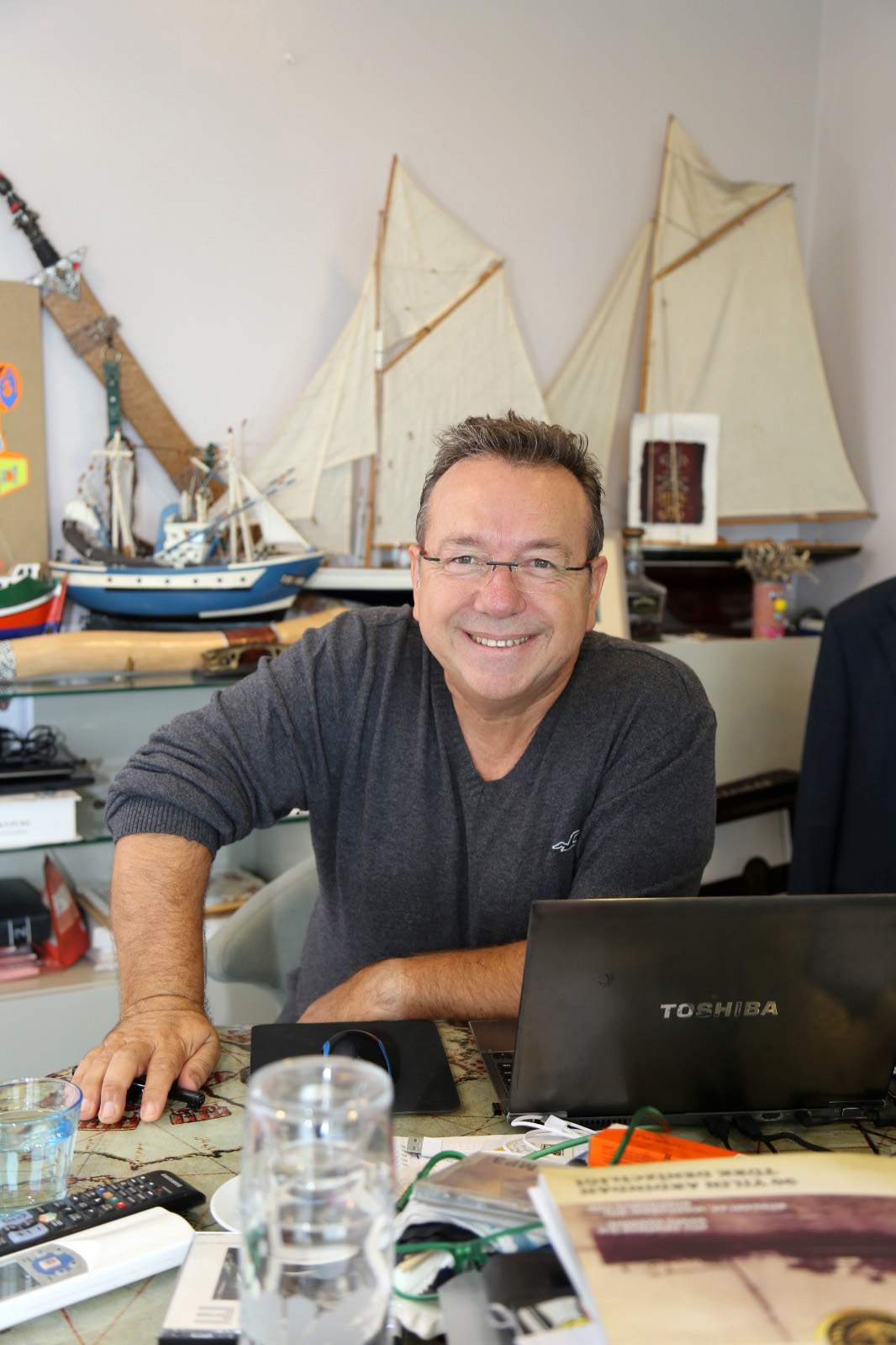
KY: How did you learn sailing?
GM: The boat was moored at Fenerbahçe marina at that time. I needed to get out to sea. They said, "Come on out, man, it's easy. This works like a car. You park, and you stop." I boarded alone and sailed to the Maiden's Tower. I saw that everyone was going swimming, there were people jumping into the sea from the shore. I said to myself, "Let me just stop here and go for a swim". I checked the depth gauge: It was 17 meters. I dropped anchor for 18 meters. But the boat wasn't stationary, it was drifting. "What am I doing wrong?" I said, calling people here and there. It turns out you need to triple it. I've sailed that boat a few times. I even traveled to Bodrum. One day I said, "Let's not stay in Bodrum forever, let's navigate to Datça." But, I didn't know the Aegean breeze. We crossed over. I was heading toward the waves at a 45-degree angle. In the worst-case scenario, I'd jump off the boat if I could make it to shore. I thought like that. So, actually, mine is courage of ignorance.
KY: Haven't you considered a sailboat?
GM: Then I said to myself, "I'll get a sailboat, it's perfect for me. It's cheap, almost free". I inquired into it. They said: "There's the Bavaria model, it's just arrived. But you need to go and take delivery of it in Slovenia. I've got money too, I paid for the boat, and I bought it. So, how am I supposed to bring this boat from Slovenia? I have a friend named Edip, Edip Ürer whom I still love very much. We met him at the airport, and we were going to Slovenia and bring the boat.
Edip asked, "Bro, do you know the wind directions?" and I replied "No". We started studying wind directions and the principles of how sails work on the way. By the time I arrived in Slovenia, I already understood certain things theoretically. Then we set off with Edip. We only had a GPS. Indicating depth, that's all. I have excellent navigation skills, I can easily find my way around, and I can read maps. But we didn't have a nautical map either. We were about to cross the Adriatic, we didn't have a map of the Adriatic. I saw that we had a road map. Using a road map, I created a small map of the Adriatic Sea based on the latitude and longitude coordinates on that map. I drew parallels on the map, I drew meridians. We crossed the Adriatic using that nautical map made out of a road map. We arrived here in 15 days. Halfway through the journey, I was now steering the boat.
KY: Nausea, so-and-so... Haven't you ever said, "Damn it"?
GM: Nothing happened. Once I felt sleepy. On the way from Athens to Mykonos, I said to myself, "Let me sleep for half an hour". I slept, I woke up, everything was normal. I never got seasick.
After that, I bought a Jeanneau boat. Then my kids wanted something without stair, so I switched to a catamaran. Of course, they are very satisfied with it as it has the spacious living room, bedrooms, bathrooms, and so on. I want to sell the catamaran now, and I want to switch to a smaller, daily boat. I grew up in a 45-square-meter house, so 82 square-meters seems strange to me. But I can't refuse my children and my wife.
KY: It was a bit of an adventure, but you've finally become a real sailor.
GM: I've become a sailor, of course. I've been sailing for 30 years. I'm coming to Bodrum in April and will be here until November. I'm in Bodrum right now.
KY: We don't see as many foreign boats as we used to, do we?
GM: This is a matter that deeply saddens me. In the past, five out of every 10 boats in Türkiye's bays were foreign boats. I mean British, Italian, German, and French boats. I don't see them anymore! That also contributed to the economy. They used to do their shopping here. I believe that blue card also played a role in their withdrawal. This issue is exhausting all of us. I have to travel a full 6-7 miles to get to the marina in Bodrum just to reach the bay half a mile away, then I return all the way back. Because, I have to dispose of the waste. This is incomprehensible to a foreigner, like, "Why am I leaving Bristol to go to Liverpool to drop off waste and then coming back?" You can't tell. Now we need to solve this. There should be different locations for waste. All ports and fishing harbors should be able to do this. These kinds of issues are killing interest in the sea and boats. I'm very sorry about that.
And of course, prices have gone up a lot. We're in a harbor now, and there is no mooring service here. You can't just take the catamaran out like that. If I go out, I need to stay at sea for about 10 days, a week, for it to be worth it. That's why I miss marina life, of course. If one day marinas return to their normal rates, I swear to God, I'll go back to the marinas. I am well aware of how difficult the marina business is, with all the pressures, regulations, and so on. Because I have some dear friends who are in marina business, and they tell me about the situation. But at this rate, with this general high cost of living, people will sell their boats. Real sailors have already started selling their boats. I'm worried about that. A new maritime policy is needed. Boating should be encouraged.
KY: In the past, when Istanbul wasn't as expansive as it is today, almost everyone had some connection with the sea and boats. It's because we all had contact with the shoreline. We were all a little bit sailors. At worst, you used to go fishing or get into a rowboat. Now the situation has reversed. There are people who have never seen the sea.
GM: Right, but seafaring culture thrives in many places. This culture lives on in Bodrum, and maritime activities continue throughout the Aegean region. From Ayvalık to Çanakkale, almost as far as Mersin. I don't know Adana much, but the maritime culture still survives all the way to Mersin. The Black Sea has maritime activities and fishing as well. But, it lacks of marine tourism there.
The bays are alive and kicking well on weekends around here. Small rowboats, small boats, families all go out together, jump into the sea from there, and have fun. Their presence in those bays makes me very happy. None of them are prosperous, just small boats, and some are handmade, wooden... They go out too.
KY: So, how does maritime culture develop and revive?
GM: In our country, the sea has always been feared. On the upper side, there is Russia, the Iron Curtain countries, Bulgaria; on the opposite side, Greece, on the lower side, the Cyprus issue, and so on... The government said like, "Trouble is coming from the sea, they shouldn't go out to sea too often". Back in the day, even leaving Çanakkale was a problem for sailors. They were told, "Hey, wait a minute, where are you going, man? Come here!" From this perspective, transitioning to maritime culture was not easy. Now, today the issues are clear. With adequate pays, mooring fees, and environmental issues, it has become difficult for people to go out to sea. If we solve these issues, maritime will flourish.
KY: There are also environmental concerns. What is your perspective on this matter?
GM: Well, we need to agree on this: A sailor does not pollute the sea. There are some urban legends saying motor-yachts come and dump sewage, and so on. I don't believe that. If the owner of a motor-yacht saw this, he wouldn't keep that captain onboard for a minute. Because he's going to go into that sea shortly.
The truth is that a large proportion of marine pollution comes from land. And I realize that this has also become a source of income. That's the blue card issue. "If I get caught, I'll get fined you 30,000 liras, 40,000 liras, or 300,000 liras". Man, his boat isn't worth that much. That's why my friends tend to buy boats without toilets. They think, "I don't have a toilet or a waste tank, so I won't bother".
Actually some sensitivities are little irrelevant. For example, the issue of protecting sea grass. A sailor doesn't drop anchor there, because that anchor won't hold. A sailor already knows that. It doesn't make sense to get to the point where anchoring is almost banned in order to protect the sea grass beds.
KY: What solutions do you come up with?
GM: It's best to make a distinction. For, there are two types of sea enthusiasts. One type does it for prestige and show; they have money, they change boats and so on... This is a stereotype. Another type is people who know the sea from their father and grandfather, go fishing, are modest with their children, and enjoy their own entertainment. This is a different type. These people swim in the sea on their own shores, where they grew up, and they are not visitors. Maritime rules must be established by making this distinction.
Solving problems is not difficult, but it requires a commitment at the state level. The government should say like: "I need to be more tolerant up to a certain point. What is this person's real motivation?" He needs to check it out, set the rules and prices accordingly.
We should be better organized in terms of the environment, of course. For example, all coastal municipalities should have proper wastewater treatment systems. This issue must be addressed at once.
KY: Let's talk about food for a bit in order to cheer us up. What do you eat and drink on a boat?
GM: I usually like home cooking. My pasta with sea water is very popular. This is a recipe of mine. I use sea water in pasta dishes. Its salt gets into the pasta and it tastes very distinctive. But you need to find clean water. Besides pasta, we grill more often on the boat. A new generation of grills has come out; the charcoal burns inside but doesn't give off flames outside. These grills are so convenient; since we're a family that loves meat, they're a lifesaver for us.
KY: Do you have fishing too?
GM: No, I don't. I really wanted it, but I couldn't quite manage it. It takes patience, and I'm not that patient. There's also a history of skin cancer in our family so I shouldn't stay in the sun for too long. I wear a T-shirt and cap even on the boat. That's why, kith and kin does things like fishing and waiting under the sun.
Once, we were bringing a boat from Marseille. We had a team, and Turan was my assistant. He cast a line, but nothing came. We've done with Marseille, and we passed to Italy, still nothing. Suddenly there was a "clang" sound. A tuna of 10-15 kg stroked. We were pulling, but we didn't have a hook. Turan jumped into the sea and literally grabbed the animal. Then Zafer came, he was a restaurant owner, he cleaned the fish. There was so much meat that we even ate it for the next breakfast. Finally, we threw half of the fish back into the sea so that the other fish could eat it too. As you can imagine, fishing isn't that easy.
KY: You made a television program about maritime life called Life at Sea [Denizde Hayat]. In 2008, on NTV. It aired on Tuesday evenings at 10 p.m. What did you get out of that program?
GM: That program is still talked about. It's even on YouTube, and it's still being watched. I think that program made a significant contribution to the maritime sector in Türkiye. Before that, there was no popular television program about the sea. Boat sales skyrocketed after the program.
We were cruising around in a boat, chatting with guests, cooking meals. There were some really fun moments during the show. Once, while traveling with Hamdi Akın and Leyla Umar, Cem Yılmaz suddenly appeared in the middle of the sea. When it came to the boat, he said, "Well, let me be useful", and grabbed the boom microphone. The people were watching like, the great Cem Yılmaz was working on the shooting with a microphone in his hand. We had a lot of fun that day.
KY: Don't you intend to do something like that again?
GM: I don't have that intention at this moment. Due to two reasons: First, it's tough to match NTV's influence. Secondly, the cost of hosting famous guests is now too high. Back then, there were no such costs. Doğuş Group sponsored the program, we were staying at the Swiss Hotel, and the marinas were also providing support. When you invited a guest, no matter how many people there were, everyone, including their agents, makeup artists, and assistants, was accommodated nicely. Now, that doesn't seem possible. I drew cartoons and contributed illustrations to Naviga and Yelken Dünyası [Sailing World] magazines. I keep doing it occasionally, but I can't be so disciplined. I was very sad when Yelken Dünyası closed, because my entire archive was there. I want to keep the magazines going, I want to continue contributing to maritime affairs, but a television program seems very difficult right now.
KY: Everyone must be wondering... Since you're a humorist, who knows what funny things must have happened to you at sea over the years...
GM: Now a memory comes to mind... One day we were coming from Marseille, we set our course between two islands. All the boats from Cannes and Nice are there. It was incredibly crowded, topless women were sunbathing around. The boat wasn't a catamaran; we tried to drop anchor, but there were rocks and shoals. It didn't work out. We saw a cable at the end of the boat. It turned out to be the city's electric cable. Power of 10,000 volts! Turan jumped in with his experience as an electrician, and we attached the cable to the boat and rescued the anchor. We almost cut off Cannes' power! There were many adventures like this joke. Wherever there's trouble, comedy follows.
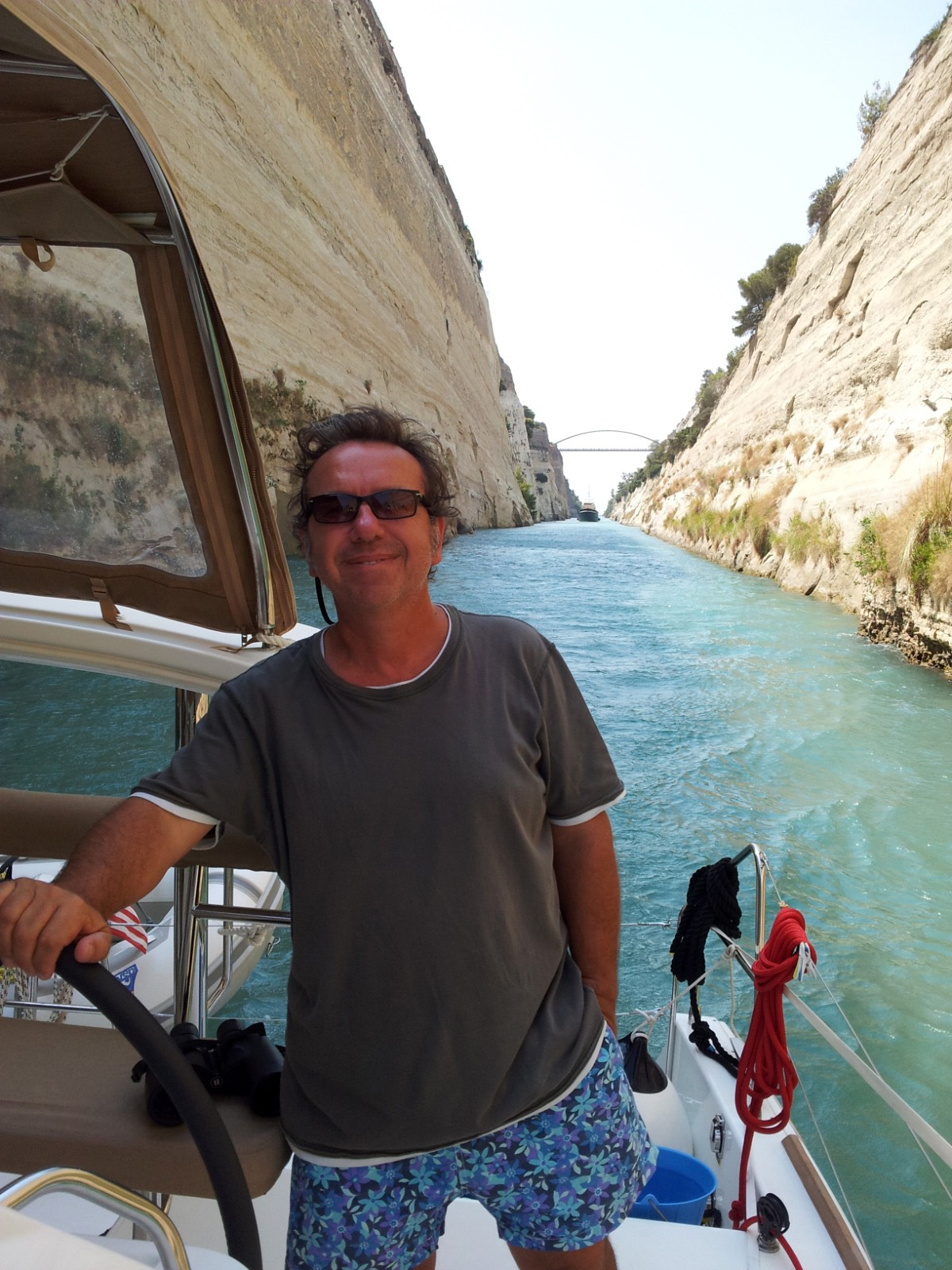
KY: Let us also commemorate Sadun Boro on this occasion. You had a funny moment with him too, didn't you?
GM: Years ago, before the summer palace in Okluk Bay was built, we were wandering around there. We moored in Mustafa's place. We were a large group of children and adults, and our friends were there too. Suddenly Brother Sadun came over. We also did a program with him on NTV. We hugged, chatted, and invited him to dinner. He said, "Okay, I'll come," and he continued, "I'll make you octopus rice". Of course, we got excited about it. In the evening, he arrived then we chatted, talked, and ate the octopus dish. It was delicious. Brother Sadun told stories, calling out to the moon, "Lunaaa!", showing the flowers... A wonderful evening.
Months passed. Çetin Kent, our friend who is both a writer and a sailor, I told him about that night too. Çetin was surprised: "Did you eat that rice dish?" he asked. "Yes," we replied. "So what?" It turned out Brother Sadun's boat didn't have a toilet. Çetin said, "He had a bucket, he did everything in the bucket, he even cleaned the octopus in it." Well, what can we do? We ate it once!
KY: Whatever Sadun Boro made would probably be eaten.
GM: He was a very special person. When I invited him to the program on NTV, he said, "I'll come, but I want my fuel." We asked, "How much fuel?" He replied, "35 liters is enough."
KY: So what do you have in your hands right now?
GM: I'm actually doing a lot while appearing to do nothing. I am currently writing a book and a play. My latest play is being staged: A play titled Aynı Çatı Altında [Under the Same Roof]. Hüseyin and Cevahir, two of my dearest friends, are acting. They are twins. Actually, they're advertisers. They wanted to do something on stage. In the end, I wrote this for them. Its subject is as follows: An angel and a devil appear at the head of a girl who is about to commit suicide; one says "jump", the other says "don't"... It unfolds as an amusing struggle. Those who have gone really like it.
And I also wrote a book titled Immortal. The story of a man who thought he was immortal. That's humor too. There are some really good observations in it: about life, living, death, and immortality. It will be published soon by Alfa Publishing. Besides that, I'm writing a cartoon about yellow ducks, plastic bath ducks. It is also linked to the sea. I also have a movie about to be filmed entitled Başsızbozuklar.
KY: I end all my interviews with the same question. I'll ask you the same question: "If you were in my place, what would you ask yourself?"
GM: That's a good question, actually. I would ask, "Are you hopeful?"
KY: So I ask: Are you hopeful?
GM: My answer is this: We are too many to be hopeless. Our youth, intellectuals, educated people, those who want democracy in Türkiye, those who want Türkiye to be a better country... we are very crowded indeed. As for good sailors, we're very numerous. As for good people, we're very numerous. Such a beautiful foundation was laid in the final years of the Ottoman Empire and crowned with the Republic that no matter what happens, that cement remains unbroken. I mean, we are like a work of Mimar Sinan, like Süleymaniye, we will not be destroyed. Perhaps that's why we live in a magnificent country with its nature, sea, and people. That's why I'm hopeful. You can be hopeful too!
Interview: Kayhan Yavuz, Setur Marinas Highlights Editor